
IPM Grade Chilli — Safe & Sustainable for Premium Markets
IPM Grade chilli from Gaman Impex is cultivated using Integrated Pest Management principles — minimizing synthetic pesticide use while maintaining crop health and yield. Every lot undergoes multi-residue pesticide testing against 200+ compounds to ensure compliance with EU MRL Regulation 396/2005, FSSAI limits, and US FDA requirements.
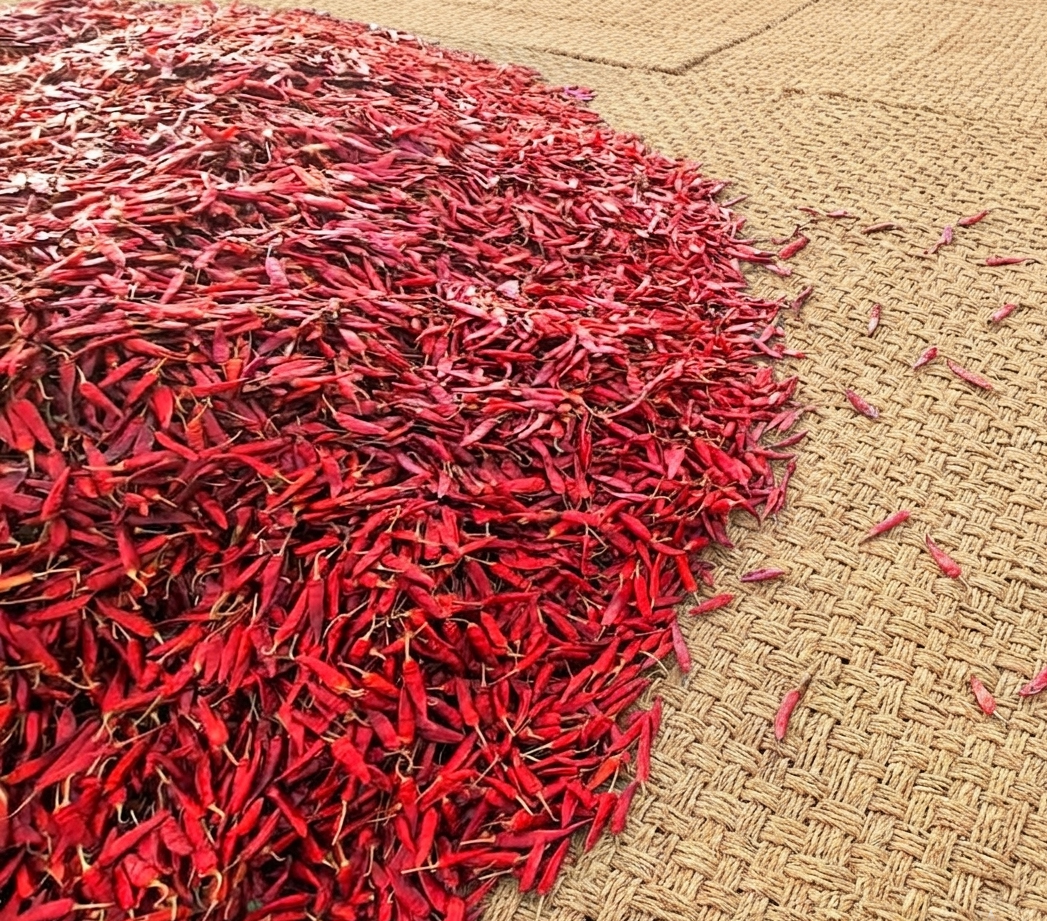
Why Choose IPM Grade?
- Multi-residue testing — 200+ pesticide compounds screened
- Compliant with EU MRL Regulation 396/2005
- Heavy metal testing: Pb, Cd, As, Hg included
- Aflatoxin: <10 ppb B1; <15 ppb Total
- Preferred grade for EU, UK, US, and Australian import markets
- Third-party lab certificate available per shipment
- Environmental sustainability — reduced pesticide runoff
Product Specifications
What is IPM Grade Chilli?
IPM stands for Integrated Pest Management — a science-based approach to crop protection that uses a combination of biological, cultural, mechanical, and chemical strategies to control pests. The key principle of IPM is to use pesticides only as a last resort, and when used, to select the least hazardous option available.
In chilli cultivation across Guntur district, conventional farming often relies heavily on synthetic pesticides to protect against thrips, mites, aphids, and fungal diseases. While effective, excessive or improper pesticide application leads to residue levels that exceed the Maximum Residue Limits (MRLs) set by importing countries, particularly the European Union.
Gaman Impex sources IPM grade chilli from verified farming clusters where farmers follow a documented IPM protocol — including scheduled scouting, biological pest control agents, use of approved low-residue pesticides only, and mandatory pre-harvest intervals (PHI) before any pesticide application.
Lower Pesticide Residues
IPM protocols result in measurably lower pesticide residue levels compared to conventional cultivation — reducing the risk of MRL exceedances at destination port inspection.
Safer End Product
Lower chemical residues mean a safer final food product for consumers worldwide — meeting the growing demand for cleaner-label food ingredients from spice buyers and food manufacturers.
EU MRL Compliance
European Union MRL regulations for spices (including chillies) are among the world's strictest. IPM farming practices significantly improve the probability of full compliance with Regulation 396/2005.
Environmental Sustainability
Reduced pesticide use results in lower chemical runoff into soil and groundwater, preserving the biodiversity of farming regions and meeting growing ESG requirements of global food companies.
EU Import Requirements for Chilli
The European Union applies strict food safety controls to imported spices, including dry red chillies. Under EU Regulation 669/2009 (as amended), chilli imports from India are subject to enhanced border controls including mandatory aflatoxin testing and pesticide residue screening at the port of entry.
Key EU Regulations for Chilli Import
- EU MRL Regulation 396/2005: Sets Maximum Residue Limits for pesticide residues in food products. MRLs for many pesticide-crop combinations are set at the Limit of Detection (0.01 mg/kg), making residue management critical.
- EU Regulation 1881/2006: Sets maximum levels for contaminants including aflatoxins in spices. Aflatoxin B1 limit for spices: 5 ppb; Total aflatoxins: 10 ppb.
- Regulation 669/2009: Requires enhanced controls at EU ports for Indian chilli, including physical and identity checks and aflatoxin laboratory analysis on a percentage of shipments.
- EU RASFF Alerts: Rapid Alert System for Food and Feed — non-compliant shipments from India are regularly flagged, affecting the entire exporting company's future shipment inspection frequency.
By sourcing IPM grade chilli with verified multi-residue test reports, buyers importing into the EU can significantly reduce the risk of RASFF notifications and port-of-entry rejection — protecting their import licenses and supply chain continuity.
Our Pesticide Testing Protocol
Every lot of IPM grade chilli from Gaman Impex is tested before shipment at NABL-accredited third-party laboratories. Our testing protocol is designed to meet the requirements of the most stringent global markets.
Testing Parameters
- Multi-residue pesticide panel: 200+ active ingredients including organophosphates, pyrethroids, carbamates, triazoles, and neonicotinoids
- Heavy metals: Lead (Pb), Cadmium (Cd), Arsenic (As), Mercury (Hg)
- Aflatoxins: B1, B2, G1, G2 (individual and total)
- Ochratoxin A (OTA)
- Moisture content
- Sudan dye screening (on request)
Third-Party Laboratory Partners
We work with NABL-accredited laboratories recognized by importing country authorities. Test reports carry NABL certification numbers and are accepted by EU/US customs inspection agencies. Buyers can also nominate their preferred laboratory for pre-shipment inspection — we arrange sample access and full cooperation.
Laboratory test reports are shared digitally with each buyer before shipping instruction confirmation. Reports are referenced in the Certificate of Analysis (COA) accompanying each shipment.
IPM Grade vs. Organic Chilli
Many buyers confuse IPM grade with organic chilli. While both approaches minimize chemical pesticide use, there are important distinctions that affect price, certification requirements, and market positioning.
| Parameter | IPM Grade | Certified Organic |
|---|---|---|
| Pesticide Use | Minimal (approved low-residue only) | Zero synthetic pesticides |
| Certification Required | No specific organic cert needed | Third-party organic certification (e.g., NPOP, NOP, EU Organic) |
| Testing Standard | MRL compliance via residue testing | Residue testing + organic certificate |
| Price Premium | 10–20% above standard grade | 40–80% above standard grade |
| Availability | Widely available from IPM clusters | Limited, requires dedicated farms |
| EU Market Access | Meets import MRL requirements | Qualifies for EU Organic label |
| Farmer Adoption | Growing rapidly in Guntur belt | Very limited, high conversion cost |
For most EU and US buyers who need MRL-compliant chilli without the premium price of certified organic, IPM grade is the optimal solution — offering chemical safety without the significant cost premium and limited supply associated with fully certified organic chilli.
Request IPM Grade Certificate & Samples
Contact us to request a sample lot with full multi-residue pesticide test report, aflatoxin analysis, and COA. We arrange pre-shipment inspection by your nominated agency.
Request IPM Certificate WhatsApp Inquiry